
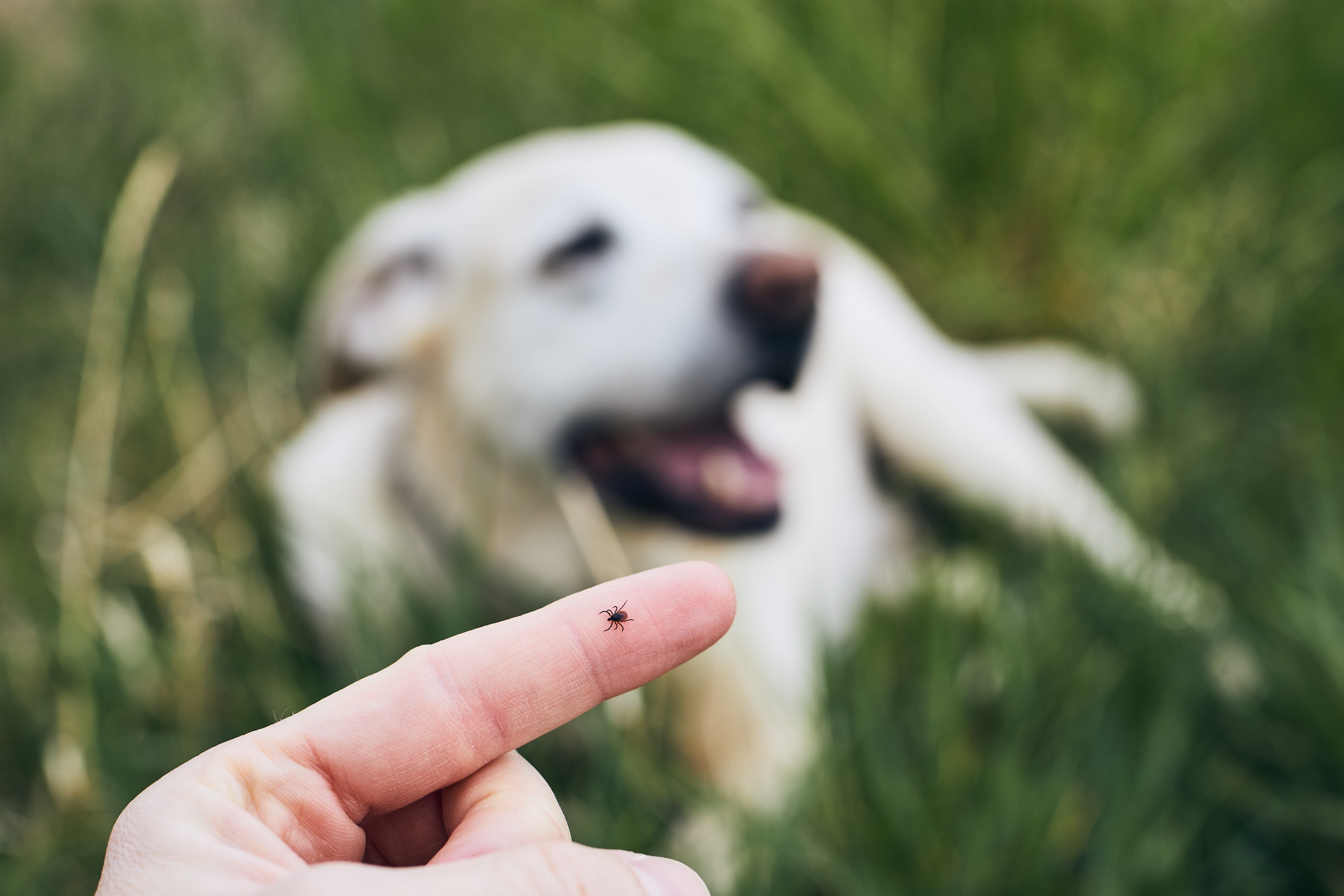
Foxtails, Ticks, and Fleas: Common PNW Pests That Send Pets to Urgent Care
Some common threats to our pets’ health are hitting closer to home in the Pacific Northwest.
Ticks are more often being found in backyards and popular parks, not just remote woodlands. Due to milder winters in the PNW, they are also commonly a year-round threat, not just a warm-weather one, along with fleas, who thrive in damp environments. Foxtail density has also been on the rise in our area in recent years, making injuries from the seed barbs a bigger concern.
Preventive care is one of the best ways to keep your pets safe from these and other parasites and pests. These vet checks often cost around $100, preventing $1,000+ medical bills down the road.
For instance, heartworm, flea, and tick all-in-one oral preventives have been widely adopted in recent years, cutting urgent care visits by 30 percent. Foxtail removal with the use of an endoscope—a flexible, thin tube with a camera and a light—has reduced surgery needs by 25 percent in the PNW.
MyPets is happy to offer same-day appointments for preventive, specialized, and urgent care.
Foxtail Density Higher in the PNW in Recent Years
Foxtails are a type of seed cluster found at the tops of certain grasses, with the following types most commonly found in the Pacific Northwest: meadow foxtail, green foxtail, yellow foxtail, and bristly foxtail. As the seeds dry out, they form barbs that help them burrow into the soil. However, those same barbs can also burrow into your pet’s skin, eyes, ears, nose, or mouth, quickly causing serious and even deadly injuries.
“Foxtail seeds break into barbs that burrow deeper,” Animals of the Pacific Northwest reports. “Check after every hike or risk abscesses.”
PNW pet owners will want to be aware that foxtail density in parks in our area recently increased by 20 percent from drought-tolerant spread. Peak foxtail season is May through July in the PNW.
It is very important to seek immediate medical care for your companion animal if you suspect an embedded foxtail. When first inhaled, foxtails will often cause dogs to violently sneeze or shake their heads. Overall, short-haired breeds are at a higher risk for foxtail injuries than long-haired breeds.
Most foxtail injuries (70 percent) migrate internally, causing infections within 48 hours unless extracted. Saline flushes are known to fail 60 percent of the time in these cases. When embedded via ears, noses, or toes, abscesses form 40 percent of the time.
Recent cases of note include in May 2021, when hikers whose dogs had inhaled foxtails during trail runs were found with lung abscesses requiring $2,000 surgeries.
In 2023, KUOW—Seattle’s NPR news station—did a story on foxtail invasions in local parks, with more than 10 dogs requiring ER treatment for eye and nose extractions.
In spring 2024, a pet clinic in Forest Grove, Ore., found foxtails requiring extraction in 15 percent of all dogs visiting the clinic. The foxtails had become embedded in the dogs’ toes or ears, causing infections.
Ticks Spreading From Forests Into Backyards and Parks, With Lyme on the Rise
Ticks have become not only a year-round concern in the PNW, but also a bigger threat overall. Between 2023 and 2025, tick habitats in our area expanded by 15 percent into the suburbs, with nearly a 25 percent increase in Lyme disease reports during this period.
In one recent year, Oregon saw a 20 percent increase in all tick-borne illnesses, including Lyme and anaplasmosis. Cases particularly spiked in urban parks and backyards. Another recent case of note occurred in summer 2023, when vets at another Oregon clinic saw a 30 percent increase in Lyme cases from backyard ticks. Today, Oregon ranks among the top 20 U.S. states for tick-borne diseases.
Western black-legged ticks (Ixodes pacificus), responsible for the majority of tick-borne illnesses in our area, frequently make their homes or otherwise “hang out” in leaf litter less than 1 meter high, and thrive following the rain.
In dogs and cats, ticks are most often found burrowing into crevices near the eyes, toes, and groin. For people whose dogs swim, be aware that common tick repellents become only half as effective after two weeks of regular swimming.
Lyme disease is transmitted quickly, in about 24 to 48 hours following attachment to a host. Tweezers are usually insufficient for removing ticks’ mouthparts, which require veterinarian care for complete extraction. Incomplete extraction can make it more likely that bacteria will spread, such as when your pet licks at or eats tick body parts.
Fleas Do Well in PNW Environments
Fleas love the PNW’s damp climate and are more commonly a year-round threat to our pets.
In the past 18 months, urban flea populations have soared. Indoor cocoons have been known to survive a full year when relative humidity is between 50 and 60 percent, resisting 50 percent of spot-on treatments.
A single flea can multiply by 1,000 within 30 days during warmer months.
“One flea infests your whole home,” a local pest expert at PestLock says. “Allergic reactions swell skin red in days without year-round meds.”
Fleas typically live two to three months on their hosts and are capable of leaving behind 50-times their body weight in “flea dirt” (feces) every day.
To test for fleas before they become highly visible, try the wet paper test (flea dirt test): Place black specks found on your pet on damp white paper. If fleas are present, the paper will turn brownish-red from digested blood in 5 minutes.
Here to Help!
If you have any questions for our team, please call us at 425-380-5880. You can also request an appointment with us online.