Hiking With Your Dog in the Pacific Northwest: A Vet’s Safety Guide
The Pacific Northwest (PNW) is possibly one of the best places in the nation to explore with your pup. Forest trails, alpine lakes, high-desert terrain, and beautiful coastal paths offer plenty of exciting places to get outside and explore with your dog.
However, a dog-friendly adventure isn’t always a dog-safe adventure. And it’s important to plan and pay attention while you’re exploring.
Many hazards that dogs face on the Pacific Northwest trails can turn into immediate veterinary emergencies. Heatstroke, for example, can progress from heavy panting to collapse. A drink from the wrong lake or pond can expose your dog to deadly bacteria or harmful cyanotoxins. Ticks and foxtails can carry risks that are easy to miss until a dog is already injured or sick.
The good news is that all these hiking emergencies are preventable, and knowing when to turn around by observing your dog's behaviour can make a major difference.
Seven Ways to Keep Your Dog Safe While Hiking in the PNW
Before heading out on your next adventure, keep these tips in mind to keep your dog safe.
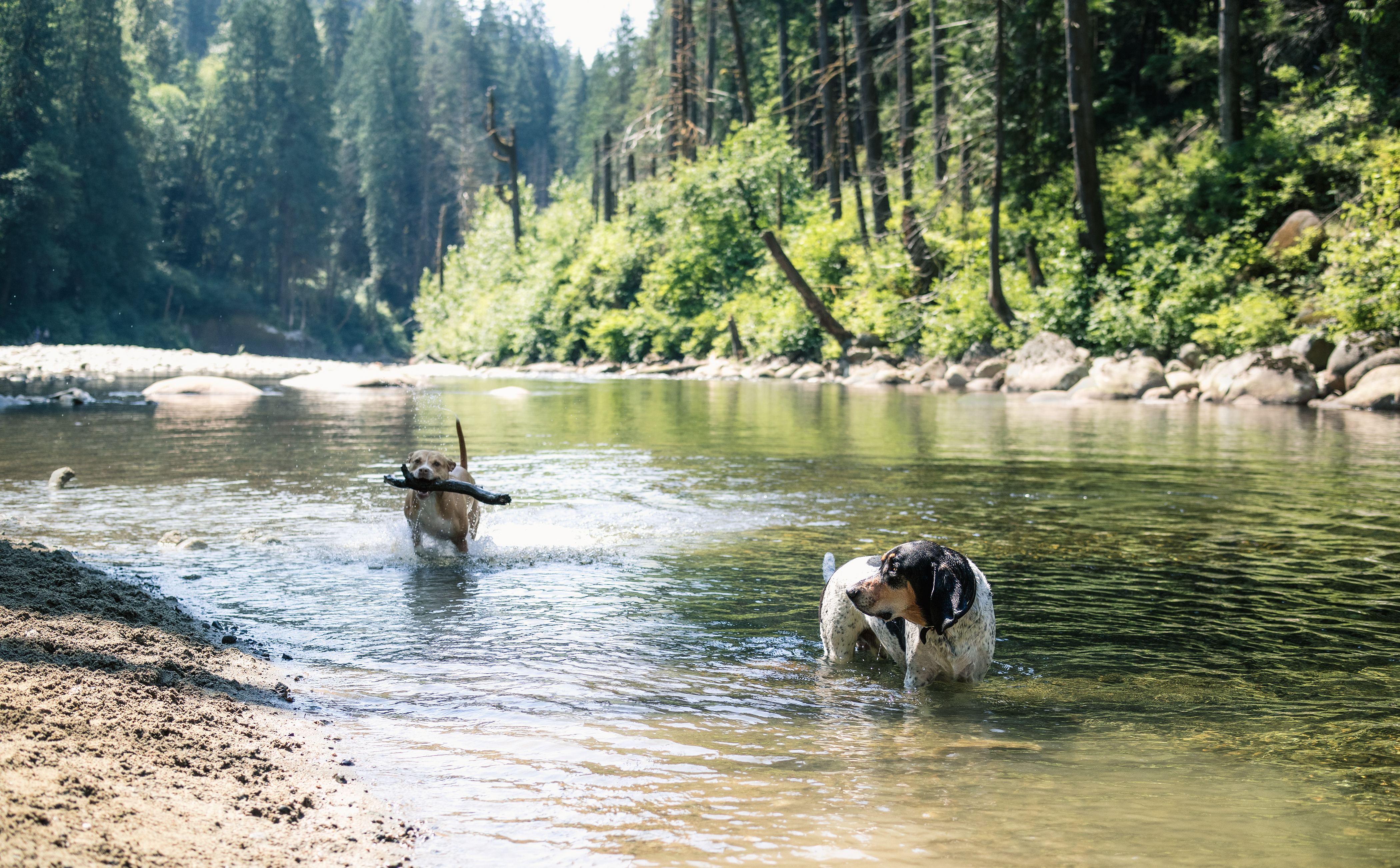
Don’t Assume Trail Water is Safe
One of the biggest mistakes pet owners make is that they think clear mountain water is automatically safe to drink. Lakes, rivers, ponds, puddles, and other natural water sources can expose dogs to serious health risks.
In Washington, more than 50 cases of canine leptospirosis have been documented since late 2004. Leptospirosis can be associated with exposure to contaminated water, including lakes, rivers, and ponds.
Dogs may be exposed by drinking contaminated water or through contact with contaminated environments, including water that comes into contact with cuts or wounds.
Another serious concern is cyanobacteria, also called blue-green algae.
Oregon Health Authority warns that dogs can become extremely ill or even die within minutes to hours after exposure to cyanotoxins. Washington State Department of Health has also documented fatal incidents involving dogs, including two dog deaths associated with a toxic bloom at Lake Anderson and two hunting dog deaths associated with a 2007 bloom at Potholes Reservoir.
The challenge is that it’s not easy to identify what water is dangerous and what is safe. Here’s what to pay attention to: water with thick, brightly colored scum, foam, or mats should always be treated as a warning sign. However, the absence of a visible bloom or posted advisory does not mean water is safe.
The safest approach is to bring water from your home and discourage drinking or swimming in unfamiliar water. If your dog drinks from suspicious water or becomes sick after swimming, call your vet immediately.
Watch out for Heatstroke
The PNW is known for its mild temperatures, which can make heatstroke easy to underestimate.
Dogs can overheat on hikes even when the temperature feels comfortable to humans. Exertion, humidity, direct sunlight, trail conditions, breed, coat type, and access to water can all affect how quickly a dog becomes overheated.
Oregon Humane Society defines heatstroke in dogs as an internal temperature above 104 degrees Fahrenheit. Warning signs include heavy panting, restlessness, vomiting, dark gums or tongue, and collapse.
If your dog does any of the following, you must stop hiking immediately and move to a shady area:
- Excessive or heavy panting
- Drooling
- Weakness or stumbling
- Vomiting or diarrhea
- Dark red gums or tongue
- Collapse
- Seizures
- Loss of consciousness
You can help cool your dog with water (avoid ice water or submerging your dog in extremely cold water). The goal is to cool your dog efficiently without causing a rapid temperature change. After your dog has cooled down, you need to head home and seek veterinary care.
Prevention is much easier than treatment; therefore, make sure you choose to hike at a cooler time of the day and shorten hikes during warmer weather. Take frequent breaks, and pay attention to your dog's energy level rather than pushing to reach the planned destination.
Check Your Dog For Ticks
Ticks may not be a visible concern like heat or water, but they can expose your dog to dangerous pathogens.
Research from southern Oregon found that 27.9% of adult Ixodes pacificus tick pools and 29.8% of nymph pools tested positive for at least one pathogen. The study also found that 15.3% of nymph pools were positive for Borrelia burgdorferi sensu lato, the Lyme-group organism.
The smaller nymph stage is particularly concerning because these ticks can be harder to see. That means a glance at your dog’s coat may not be enough. It’s important to check your dog thoroughly after a hike.
Make sure to check your dog’s:
- Ears
- Neck
- Face
- Armpits
- Groin
- Between the paws
- Under the collar
- Around the tail
Dogs that spend a lot of time outdoors may also encounter other parasites. A large PNW fecal survey covering more than 82,000 dog samples found Giardia to be the most common parasite identified, appearing in 6.77% of samples.
Have a chat with your vet about the parasite prevention plan that makes sense for your dog’s lifestyle, especially if your dog hikes frequently, swims, or spends time in wooded areas.
Don’t Ignore Foxtails (and Other Grass Awns)
While foxtails may look like an ordinary part of summer vegetation, these barbed grass seeds can create painful and sometimes serious injuries. Because of the barbed structure, they continue to move deeper into the tissue.
A Seattle-area foxtail invasion in 2023 reportedly resulted in more than 10 dogs needing emergency treatment for foxtails lodged in their eyes and noses after exposure in local parks.
Veterinary guidance from UC Davis notes that while many foxtail injuries can be treated on an outpatient basis, some cases become serious enough to require imaging, endoscopy, or surgery.
Watch out for signs like sudden sneezing, pawing at the face, squinting, head shaking, limping, excessive licking of a paw, or swelling. If your dog suddenly starts to show these symptoms after hiking through tall grass, don’t just assume it’s resolved on its own.
Foxtails can become lodged in a dog’s nose, eyes, ears, paws, and skin. A foxtail can move deeper into the body, making prompt evaluation important.
Keep Your Dog Leashed
A leash is not just about trail etiquette; it can also be an important veterinary safety tool.
A survey of active and working dogs found that 48% experienced at least one physical activity-related injury. Off-leash activity and uneven terrain were identified as significant risk factors. That is particularly relevant in the PNW, where trails can include steep slopes, rocky terrain, river crossings, cliffs, and dense forest.
Additionally, keeping your dogs close can also reduce the risk of encounters with wildlife. Washington wildlife guidance warns that small dogs and cats can potentially become prey for cougars. Oregon wildlife guidance also advises hikers to keep dogs leashed and remain alert in cougar country.
While wildlife attacks can be rare, the risk of unpredictable encounters increases when dogs run ahead, chase animals, or return to their owners with wildlife following behind them. Leash control is also important for snakes in areas where rattlesnakes are present, especially in sunny and rocky Central Oregon terrain.
Before hiking, research the wildlife risks specific to your destination. Make sure to keep your dog close, stay on designated trails, and avoid allowing your dog to explore too far from you.
Make Sure You’re On a Dog-Friendly Trail
What you might not know is that a trail that may look perfect for your dog might actually prohibit pets. These rules exist for many reasons, including protecting wildlife, preserving sensitive habitats, and protecting your pets.
Some examples include:
- Mount Rainier National Park generally prohibits pets on trails and wilderness areas, with limited access along the Pacific Crest Trail corridor. Where pets are allowed, leash rules require dogs to remain on a leash that is no longer than six feet.
- North Cascades National Park also has highly restricted pet access, limiting dogs primarily to specific corridors, including the Pacific Crest Trail and designated road areas.
- Olympic National Park allows dogs only on a limited selection of trails, beach areas, and developed locations.
Make sure to check all the current rules for the exact trail you plan to hike and choose a trail that legally allows dogs to prevent you from having to turn around after arriving.
Plan for More Than the Hike
Plan for the unexpected. Before you leave your house, think about everything that can happen if your dog becomes injured, overheated, or sick, especially if you’re several miles from your car.
Some essentials to bring with you:
- Fresh water
- Collapsible water bowl
- A leash
- Waste bags
- Basic first-aid supplies
- Tick removal tools
- A towel
- Extra food for longer hikes
- Your phone and a backup power source when possible
It’s also a good idea to take note of the nearest emergency veterinary clinic before entering a remote area.
A Safer Hike Starts Before You Reach the Trailhead
Hiking with your dog in the PNW is truly an incredible experience; however, make sure you are well prepared. While the region's trails offer beautiful scenery, it also comes with hazards that can be easy to underestimate.
Contact your vet immediately if your dog experiences collapse, seizures, difficulty breathing, repeated vomiting, severe lethargy, sudden limping, significant swelling, persistent sneezing after exposure to tall grass, eye pain, or illness after exposure to questionable water.
With the right planning, you and your dog can enjoy everything the PNW has to offer while reducing the risk of preventable trail emergencies.